Tuesday, July 27, 2010

Tissue Donation


Every year thousands of lives are saved or enhanced from the gift of tissue donation. Whether it’s a burn patient who has received countless skin grafts to heal or a athlete receiving a donor tendon so they can play their favorite sport again, tissue donation is the ultimate gift of life to those in need.

One full tissue donor can save and enhance the lives of more than 50 people with the various grafts that can be made. In 2009 alone, nearly 1,000 tissue grafts were recovered from 57 donors at Texas Health Harris Methodist Hospital Fort Worth. These grafts included skin, bone and tendons, heart valves and veins.

Skin grafts save the lives of thousands of burn patients every year. Grafts recovered are about the same thickness of a sunburn peel. They are processed and meshed to provide greater surface area. These grafts aid burn victims by preventing fluid loss and infection. The average donor yields nearly 3.5 to 4 square feet of skin, while the average severely burned patient requires nearly 40 square feet of skin. Skin is recovered from the back and front and back of the thighs. Burn victims require so much skin because the body will continuously reject skin grafts, so they have to be replaced every few days.

Bones from the upper and lower extremities are used in many different ways. They can be cut into small rings to alleviate severe back pain in spinal fusions. These bones also can be cut into cubes or crushed for orthopedic or dental surgeries. Tendons recovered from the lower extremities are used most commonly in ACL repairs. Bone and tendon grafts from one donor can enhance the lives of up to 50 people with the various grafts that can be made.

If the heart cannot be transplanted, it can be recovered for valves. These valves are used in children with congenital heart defects. Saphenous veins from the leg can be used for dialysis access in dialysis patients.

One of the most common myths about organ and tissue donation is that one cannot have an open casket viewing. However, the donor is treated with the utmost respect and reconstructed so there is no difference in appearance so an open casket is possible.
There is also no cost to the donor family for any cost related to donation.

“You have the power to donate life. Be an organ, eye, & tissue donor.” You can register your decision at www.donatelifetexas.org and to hear stories of hope from tissue donation go to www.communitytissue.org/miracles/recipients

- Amanda Williams, transplant coordinator

Monday, July 26, 2010

Bariatric Diaries 6: The dog days of summer!

The last few weeks have been HOT!! July has brought things into perspective for me on the whole recovery process from my surgery that I had in May. Over the July 4th weekend, things were business as usual with a few minor changes being made for my recovery. We went to lovely Junction, TX for some good times on the Llano River and relaxing at the ranch for the weekend. Unfortunately, there were no hot dogs and adult beverages for me this year but I was ok with that. I made due with the things I could eat and had just as good of a time. On Monday, we were headed back home and all the sudden something just wasn’t right. I was starting to feel sick and had not interest in even drinking water. By the time I got home, things were really not going to well. I tried food, and that didn’t work out. I tried water and Gatorade, and that did not work out either. The thing that scared the heck out of me was that when I got sick, I was vomiting black coffee grind type material. Just for the record, I have not eaten anything black since my surgery so you can imagine what was running through my head. I called Dr. Lorimer in a state of panic and he instructed me to not eat or drink anything the rest of the day and that I was throwing up dried blood. The real question is where the heck it came from. The next morning, I was not feeling well so I called back and moved my appointment up a day. We came to the conclusion that this sometimes happens and I needed to take it easy on food for a few days and see what happens. He also gave me a medication for stomach ulcers in hopes of being able to coat my stomach before eating. Let me be the first to admit that I hate taking pills, but it is a part of the recovery. This pill he gave me is approximately the size of a small baby so I was even less thrilled. In all seriousness, it is big but I was able to break it in half and get it down the ole windpipe. Blood work and a little but of chaos later, I am all good. Dr. Lorimer did tell me during the appointment that he felt like I was losing weight a little too fast. I am glad to report that it has now slowed down.

I also thought I would share with you the top things that I am convinced I will never be able to eat/drink again:

1. Potatoes of any kind. Complete mental block on them right now.
2. Cream of Wheat. This was my dining choice immediately after surgery. Just can’t do it.
3. Chicken Nuggets. This is my son’s favorite meal, he is sad that I don’t get to share it with him anymore.
4. Beans. I have tried several times in many different consistencies and they just don’t agree with me anymore
5. Grand Prairie Water. I am officially a water snob now. I keep a case of cold bottled water handy at all times.

I feel so much better after a little over 2 months since surgery. I get constant reminders from my wife and 6 year old about things I should and shouldn’t be eating. That gets a little old after some time, but I know they are doing it for my own good. My son thinks it is funny to remind me before we go anywhere to eat that I can’t have one thing or another and tries to make his food choices based on what I can have. Speaking of food, I think I am becoming a pregnant woman. I have these cravings that are so odd sometimes, but I am a little hesitant to try them out. For example, I really want lemonade one minute and then I think I just have to have a pickle. I have tried the lemonade and it has become a drink of choice this summer, I bought pickles at the store yesterday but I will try those slowly in the near future.

Other than some really bad decisions on my part a couple times, surgery has been a huge success so far. I have learned from my mistakes and try my best to not repeat them. I am stubborn and I admit that, but most of the mistakes I made have taught me that I don’t necessarily get my way when it comes to food anymore. Drink your water and lots of it. The dehydration factor is in full effect on these 100 plus degree days. As of today, I have lost a grand total of 101 pounds.

The journey continues…..

- Casey Armstrong, bariatric patient

Thursday, July 15, 2010

Proper Drug Disposal: An Environmental Concern


In recent Associated Press report, over just a five-month period of time, twenty-four metropolitan areas across the U.S. were found to have detectable levels of drugs in their drinking water. Philadelphia reported fifty-six different pharmaceuticals, including pain medications, hormones, and antidepressants. The report also included data on the feminization of fish in waterways, presumably from estrogen-containing drugs, and various pharmaceuticals found in earth worms.

A common misconception is that the body absorbs all drugs introduced to it with no waste byproduct, when in fact, many of the drugs we take are excreted unchanged where they then make themselves in the wastewater system.

While much of this problem is a result of natural elimination by humans and animals, the issue of pharmaceuticals found in the environment is due to improper disposal as well. This happens most commonly by pouring or flushing unused drugs down household drains.

Most know not to throw car batteries in the trash, or motor oil down the drain, but when it comes to proper drug disposal most are unaware of the proper procedure. However, there is also little literature on how to properly dispose of medications. The Environmental Protection Agency is currently working on recommendations for patients and institutions on how to properly dispose of drugs.

Currently, there are occasional “drug take-back” programs in the community. Some are provided through participating pharmacies. Many states across the U.S. are utilizing law-enforcement in this process through organized drug “take-back” events. These programs will continue to arise as more attention is placed on drug disposal and the environment.

If no drug take-back programs are available in your area, there are recommended disposal procedures found on the Federal administration’s website:

http://www.whitehousedrugpolicy.gov/publications/pdf/prescrip_disposal.pdf

Drugs flushed down the toilet can damage the environment and eventually end up in drinking water. In order to minimize our impact on the environment, encourage those needing to dispose of medications to utilize these resources and stay aware of community events involving drug take-back programs.

Lance Ray, Pharm.D.

Monday, July 12, 2010

Reading and Interpreting Food Labels


As part of nutrition education for the Bariatric Program, I often include how to read and interpret food labels. Most of us are familiar with the Nutrition Facts Panel; however, there are two areas that bear review.
1. Serving Size: My son bought a $5.00 candy bar from a little girl who was selling candy for a fund raiser. Five dollars seems high for a candy bar, even for a fund raiser, but it was a really big candy bar. I casually looked to see how many kcalories it contained. The label said 220 kcalories. Not really that bad, then, I looked at the number of serving sizes: 2 ½ servings in this bar meaning that the entire bar contained 550 kcalories. I did notice this morning that my son, not a big sweet eater, had saved most of the bar in a zip-lock bag (not the sandwich size bag but a quart size bag.)
Lesson learned: remember to look at the serving size and the number of servings on the label.
2. Trans fat: The FDA has required food manufacturers to list trans fat on the Nutrition Facts Panel since January 1, 2006. A food can be labeled as having zero trans fat but still contain .5 grams of trans fat per serving. Therefore, it is possible to eat more that the AHA recommends (2 grams a day) by eating several servings of these foods without realizing it.
Even if you are able to decipher the information on the Nutrition Facts Panel, sometimes the “front of the package” labels can be misleading. In fact, a commentary in a recent issue of JAMA reported that the front of package labels may so thoroughly mislead the public that eliminating “all nutrition and health claims from the front of processed food packages” should be considered. This action may seem drastic but I agree that something needs to be done to protect the public from these misleading claims.
The FDA is aware of this problem. Indeed, FDA commissioner, Margaret Hamburg announced last fall that her agency would be taking nutrition and health claims on packaging seriously. She stated, “some nutritionists have questioned whether information is more marketing-oriented than health-oriented”.

- Jamie Bass
Dietitian, Bariatric Services

Friday, July 9, 2010

Sunscreen 101


Sun exposure and sunburns have been linked to the development of melanoma, a deadly form of skin cancer. All skin types, from those that are fair and burn easily to those that never burn are at risk for developing skin cancer if not properly protected. The best way to protect sun-exposed skin is with sunscreen.

There are numerous sunscreens available, so how do you know what to look for? When choosing a sunscreen make sure it protects against UVA and UVB rays. UVB rays are primarily responsible for sunburns. UVA rays can cause wrinkles, leathering, and photo aging. Many people assume they are protected from the sun’s harmful effects when indoors but UVA rays can penetrate windows.

Another important factor when selecting a sunscreen is the SPF or Sun Protection Factor. SPF is the ability of the sunscreen to prevent UVB damage. The American Academy of Dermatology recommends wearing at least an SPF of 30, which blocks about 97% of UVB rays. There is currently no measure for protection against UVA rays, but this is currently being evaluated by the FDA and may lead to changes in the future.

For maximum protection sunscreen should be applied one half hour prior to sun exposure and should be reapplied every 2 hours. Water proof and sweat proof formulations are available but should also be reapplied frequently. Most people do not apply enough sunscreen. It must be applied generously to exposed skin, then rubbed in completely.

Some medications such as diuretics, certain antibiotics, and chemotherapy drugs can make the skin more sensitive to the sun. Commonly used antibiotics including Levaquin, Cipro, Bactrim, and doxycycline and diuretics like furosemide and hydrochlorothiazide are known to increase photosensitivity. While taking medications such as those, people should protect their skin by covering up, wearing sunscreen, and limiting sun exposure.

Wearing sunscreen is an easy way to decrease the risk of skin cancer. According to the American Academy of Dermatology, everyone regardless of skin type should wear sunscreen of at least SPF 30 year-round. All of this information and more can be found on the American Academy of Dermatology website: http://www.aad.org/media/background/factsheets/fact_sunscreen.htm.

Lacey Mullins, Pharm. D.

Thursday, July 8, 2010

From a physician's perspective...


When Ashley asked me to write a blog, my first thought was, “Holy Cow! What in the world do I talk about?” I could talk about my fellowship or the Palliative Care Unit or something random. What I eventually decided to do was highlight a group of individuals that have impressed me to no end. I recently graduated from residency last June from a rival hospital, and through my rotations have worked at hospitals around the country, so I have seen a wide variety of teamwork.
The first thing I noticed after spending a few days here at THFW is the nursing staff at our Palliative Care Unit. Wow! What an amazing and dedicated group of people. As a fellow in Palliative Care, I am learning to relate with patients and their families in ways that never really were an option during residency. The nurses and nurse practitioners on the Palliative Care Unit are among the best I have ever seen. Every day I learn more about being compassionate and caring, and they are my number one example. We frequently have patients transferred out of the PCU for a variety of reasons, and many times patients ask to be transferred back because they miss that compassionate care.
I have never seen such a giving and loving group of nurses, and they deserve all the accolades that can be given them, but it’s not just the emotional aspect of these men and women that impress me, it’s also the technical aspect. The Palliative Care unit is also an acute med-surg. unit, and these nurses excel in that respect also. They provide quality, accurate care that rivals any other med-surg. unit in any hospital I’ve worked with. If you see any of these amazing nurses about the hospital, please pat them on the back and tell them, “Good job!” The work they do is not only physically draining, but emotionally draining, and they do it with style and grace.

- Dr. Stephanie Sun
Internal Medicine Physician

Friday, July 2, 2010

Have a Safe 4th of July !!


Independence Day honors the birthday of the United States of America and the adoption of the Declaration of Independence on July 4, 1776. It's a day of picnics and patriotic parades, a night of concerts and fireworks, and a reason to fly the American flag.
Typically this weekend is a time filled with family reunions, backyard cookouts and road trips. I have great memories of piling the kids into the car, playing car bingo and answering a myriad of questions, with the most popular being “are we there yet?” Keep in mind this was all before personal DVD’s were invented. With all these trips, I never realized that summer is the most dangerous time of the year to be on the road. In fact, according to the National Highway Traffic Safety Administration, and the Fourth of July weekend is historically the deadliest for road travel in the US. Interestingly enough, an overwhelming percentage of Americans consider winter to be the most perilous driving season. Rural roads are particularly hazardous. Fifty seven percent of highway deaths occur on these back roads.
Alcohol is a factor in almost half of these holiday crashes. Emergency room visits for underage alcohol use will nearly double this weekend. Texans lead the nation in alcohol-related fatalities. This weekend, local police will be out in force helping to keep us safe. The best defense against a drunk driver is your seatbelt. Put it on. Even in the back seat. Do it for your family so you can spend even more holidays together answering those questions like “are we there yet?” Happy Fourth!


Mary Ann Contreras RN
Injury Prevention

Thursday, July 1, 2010

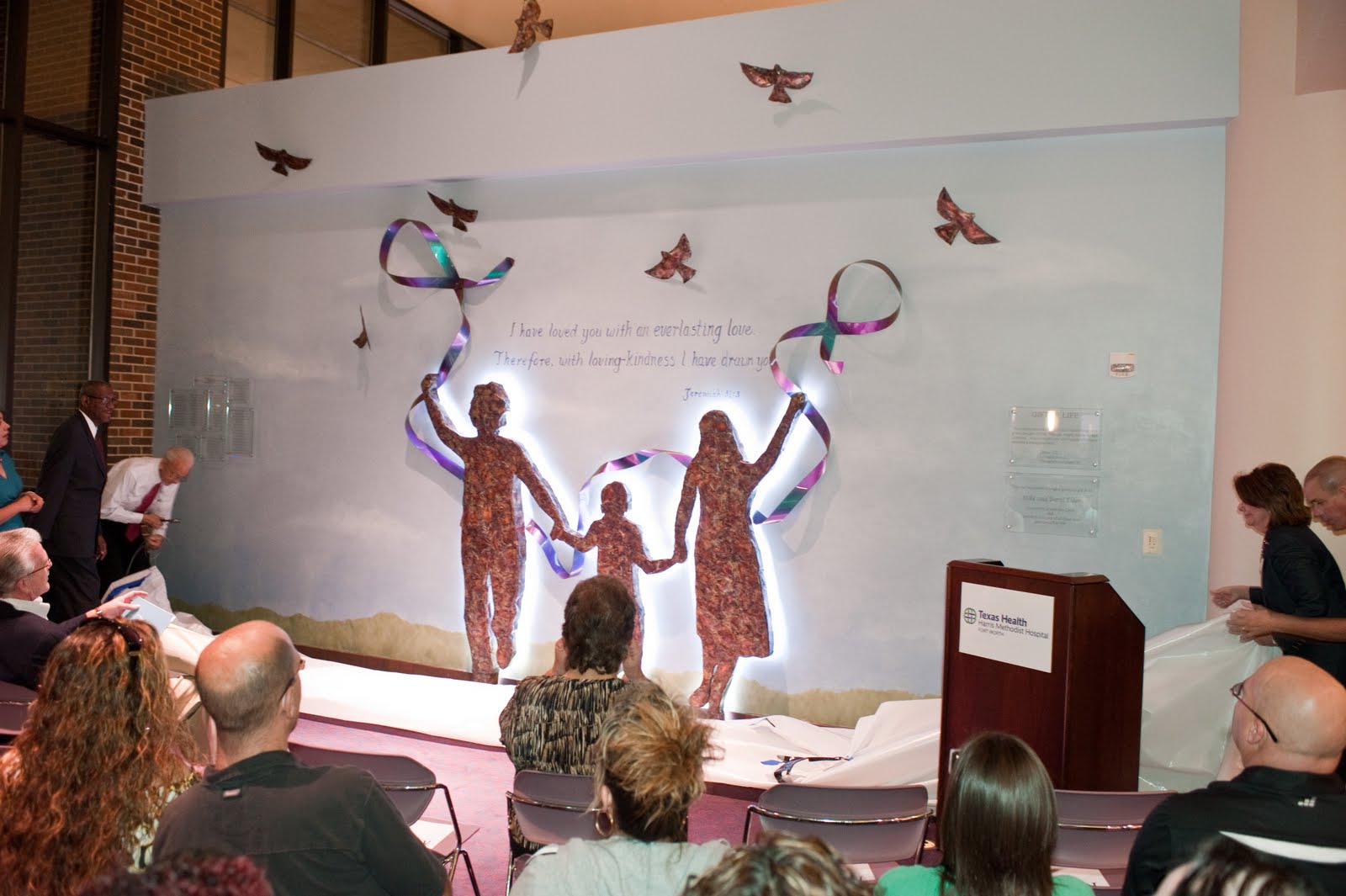
The Circle of Life


The circle of life begins and ends everyday for many within the walls of this hospital. Tears of joy and tears of sorrow are shed as people experience a wide range of events from the birth of a new child to the loss of a loved one.

But for some, the circle of life does not stop with the end of one’s life; rather it continues through the life of another through organ and tissue donation.

Texas Health Harris Methodist Hospital Fort Worth, together with LifeGift, has created the “Wall of Life” to recognize and honor the many mothers, fathers, sons, daughters, grandparents and many others who gave the ultimate gift – the gift of life. This precious gift completes the circle of life and further extends the legacy of each individual.

In addition to recognizing those who gave life, the wall also recognizes those who received it through the precious gift of kidney transplants. These recipients are here today because a family – deep in sorrow and grief – had a heart big enough to say “yes” to organ and tissue donation, passing on the gift of life. At the same time, we also honor a different type of donor – a living donor.

Living donors are people who are healthy enough to donate a single kidney so that someone else might be freed from the confines of dialysis and resume normal life. Living donors do not always donate their kidneys to family members. They may also donate to a perfect stranger simply because they can.

If the world had more people and more families like the ones we are honoring with the “Wall of Life,” the national waiting list for lifesaving organs would not exceed 108,000. Nor would there be a shortage of life-enhancing tissue.

Created by Rebecca Low, a local Fort Worth artist, the wall depicts a man, a woman and a child. In essence, these figures represent everyone – mothers, fathers, brothers, sisters, you and me. The figures are linked together by a ribbon and surrounded by doves representing peace, love and the miracle of life. Most importantly, the wall carries the names of those who have given the gift of life and those who received that precious gift.

I hope that you will take some time out of your busy schedule and stop by the “Wall of Life” located in the main lobby in the alcove just past the gift shop. I hope that the “Wall of Life” will inspire you to say “yes” to organ and tissue donation, continuing the circle of life.

Amanda Williams
Donation Clinical Specialist
LifeGift

Tuesday, June 29, 2010

Delivering Hope


Hope. This very short word is a powerful one when you are struggling with infertility. Believe me, I know. Throughout my battle with infertility, all I wanted a doctor to do was to tell me it was going to be ok and there was hope. Guess what? There was hope for us and there is hope for many couples.

Many people do not know that 10 percent of couples experience infertility problems. That is the other amazing thing about this journey. When you are in the throws of trying to start a family, the people who you never knew struggled with infertility become some of your greatest supporters and resources.

Finding a physician you believe in and you trust is also extremely important. If you are like many couples, you do not know what is involved with infertility treatment, if you are a candidate or even how much it is going to cost and if your insurance will cover it. These are normal questions!
If you find yourself reading this and feel like you can relate, I want to invite you to join us for a free advances in medicine seminar with Dr. Laura Lawrence.

Details:
Infertility Advances in Medicine
July 14, 5:30 - 6:30 p.m.
Texas Health Harris Methodist Hospital Fort Worth
Call 1-877-THR-WELL or click here to reserve your spot

An opportunity like this is a very non-threatening way to get many of yours and your spouse's or significant other's questions answered. Hopefully, for many of you, it will offer some hope! Hope to see you there!

- Whitney

Monday, June 28, 2010

Bariatric Diaries 5: Is the room spinning?


First of all, I apologize for taking longer than normal to get my next blog entry done. The last few weeks have been very, very hectic to say the least.

I went back to see Dr. Douglas Lorimer a couple weeks ago for my 3 week checkup after surgery. It was pretty routine office visit. He checked out all the incisions to make sure everything was healing up well and asked some questions about how the diet was working out for me. After I got done, he sent me over to the lab to have some blood work done and to see if there were any changes since pre-op. I got a call later in the week that everything was looking good and all the results within normal range. I am fortunate to have not had a lot of medical issues before surgery with the exception of normal day-to-day stress and something called fatty liver syndrome. From my understanding there are lots of bariatric patients who have fatty liver syndrome. I assume that since all the results came back normal, that maybe that is gone now. I will need to confirm with Dr. Lorimer next office visit. I have my next follow up on July 7th.

Then last week, I received some very unfortunate news. My lovely mother passed away at the young age of 59. My poor mother has been through the ringer with medical issues in her life but had been doing well recently so this came as a huge shock. So instantly life go a little crazier as my family starting making plans and trying to deal with all the stress that comes with it. I didn’t do very well with my diet last week. I was so busy that I found myself on what amounted to a very poor clear liquid diet again. I wasn’t keeping much of anything down and was starting to think that I had fallen off the deep end and maybe mentally I was making myself sick. I talked with our dietician Jaime Bass at the hospital and she reminded me to do my best to stay hydrated and eat when I needed to eat. She put my mind at ease that I was not going crazy and that a lot of this was probably my body’s way of dealing with stress. After all in just a month, I have had major surgery and now this. My body probably didn’t know what to think. Things are better now and one of my biggest supporters is my guardian angel who can be with me all the time. She will be missed, but I have found peace in knowing she is in a much better place and all her health problems are gone.

I experienced my first holiday since surgery, Father’s Day. We spent some time with my dad on Saturday and then had dinner with my father n law on Sunday afternoon. My son and wife plotted together to make a custom made card for me. I opened the card and couldn’t help but laugh a little when it said I love you dad. I am glad you had your surgery. At first I thought this was my wife’s way of making a joke but apparently when they ordered online, that is what he asked her to put into the card. Obviously with the holiday and the meals that came with it, I was put to a major test. I did well. I had my little portion of food and sat back and enjoyed the company of my family. I think it is funny that people realize the position I am in and apologize for eating in front of me. I make it a point to explain to them that it is not a problem and as much as I would love to partake in the bbq or steak, I would much rather not be sick from eating it.

So after yet another week off work, I am back in the saddle and working to play catch up here at the office. Things are going well in my mind though. It is nice to be back at work and talking with my clients again. It has been a very productive week which always makes it better and next month is already looking up as well.

These little life occurrences make the journey a little more interesting but really tests my ability to stay strong and continue down the right path. If it is ok, I would prefer to not have many more big surprises like I have had over the last couple weeks for awhile. So far I have lost 80 lbs since I started this journey and I feel like I am beginning to gain some of my strength back. I encourage everyone to come to the support group for Bariatric surgery patients Thursday, July 1 at 6:00 pm at the hospital. Jaime Bass from bariatric services will be discussing Bartiatric diet which I know I can definitely use.

The journey continues….

- Casey Armstrong

Friday, June 25, 2010

It's Snake Season


Snakes are remarkable animals successfully living on land, sea, forests, grasslands, lakes, deserts and as of last week my backyard. Although the one my back porch wasn’t successful for long. I don’t know how you feel, but I HATE snakes. I coexist with all the geckos, spiders, frogs and other various forms of wildlife that make it to my backyard from the open field behind my house. I don’t even mind listening to the coyotes that “yip-yip” alongside my fence at night after a big rain. But I do draw the line at snakes. They are simply sinister. I realize that most snakes are harmless and even beneficial. I have read these cold blooded creatures are almost always more afraid of humans than we are of them. Whoever wrote that hasn’t met me.
With that being said, I am focusing this month’s blog on snakebite prevention. We are now officially in “snake bite season”. These legless reptiles are more active in the summer months. Recently several patients have been admitted for snake bite treatment. Most of those bites have been from copperheads and rattlesnakes. All snakes are meat eaters. They don’t see humans as their next “value meal” but rather as a threat and will strike out when they are startled, provoked or have no means of escape if cornered. There are about 45,000 snakebites per year in the US. Only a small percentage of those are poisonous. If you are bitten you should seek immediate medical attention. Effects from a bite can be instant or gradual. Puncture wounds can easily become infected from non-poisonous varieties. A tetanus shot is required if the victim hasn’t had one within 5 years. Keep the injured area below the level of the heart, and DON’T apply a tourniquet or ice. Remove any constricting items near the bite, such as rings or other jewelry which could cut off blood flow if the bite area swells. Being calm also helps slow the absorption of the venom. Although I don’t believe remaining calm after a snakebite is even possible. Do not risk further bites or delay treatment by attempting to capture or kill the snake.
Obviously snakebite prevention is far superior to treatment. If you see a snake, give him the opportunity to escape. Step away slowly and cautiously. Use a flashlight when camping. Never reach into firewood or under rocks or crevices without examining them first. I even wear my cowboy boots when trimming bushes (we do live in Texas after all). Be aware that snakes may be swimming in the water. Avoid snakes that appear to be dead, as some species will actually roll over on their backs and stick out their tongue to fool potential threats. Which means those species are essentially smarter than my Jack Russell. If you do kill a snake, know that the detached head can immediately act by reflex and potentially bite.
Have a healthy respect for them (or at least a rational fear) and enjoy your summer.

Mary Ann Contreras RN
Injury Prevention

Monday, June 14, 2010

Doctor Talk


I’ll set the scene: You have been admitted to the hospital and this time your Primary Care Physician (PCP) won’t be coming to see you as an inpatient, so you’re assigned a hospitalist. A hospitalist is a physician who specializes in inpatient care. The hospitalist just read your medical record when they approach your bed to discuss your care…
Communicating with this new physician can seem intimidating since you’re in a new environment and sick enough to be admitted. It’s important that you tell the hospitalist and nursing staff all the important details of your medical history and current symptoms so the best plan of care can be created. There’s a natural hesitancy not to tell a stranger everything about your private medical conditions, but the physician and staff are here for you and you’re protected by federal privacy laws. The time to open up is now.
It’s no secret that hospitalists and PCP’s have a lot of patients to see in the hospital and don’t always ask if you have any questions before they leave your hospital room. Please don’t let that stop you from asking. It’s best to be prepared. Write down the question(s) beforehand so that you’ll be organized, then ask the physician if they “have a minute” to answer your most important question(s) and fire away. Think of it as a “grocery list” for your acute health problems. If possible, it’s best to limit questions to the appropriate specialist. For example, the neurologist will not be able to answer your question about an ankle rash. Your nurse is your guide about which physician to ask which question on your list.
If you listen to the physician’s answers and are not sure if you understand, it’s ok to repeat back what you think he/she said and let them correct you if need be so you’re both on the same page. Misunderstandings left uncorrected are worse than not understanding at all.
It’s important to be proactive and involved in your own care. As Texas Health Harris Methodist’s “Patient Rights and Responsibilities” states, “You have the right to take part in developing and carrying out your plan of care.” Communication is the key and whether you’re at our hospital or a routine physician’s appointment, it’s best to make the most of that limited time by being prepared.

- Craig Pomykal
Patient Advocate

Friday, June 11, 2010

Beyond the walls of the hospital!


If you take time to think about it, how often do you hear comments such as, “People just aren’t like they used to be?” Or “Well in the good old days, people would treat you better.” Or “Nobody cares for anyone but themselves.” We’ve all heard it and probably even said it a time or two. So, if you or a loved one has ever felt dismayed about your fellow human beings, then this story might just change your mind.
Not too long ago on the Palliative Care Unit, a decision was made that a patient would be going home on hospice. A hospital bed would need to replace the bed in the bedroom...but there was a problem. Both husband and wife were elderly, and the husband was not able to dismantle the bed and did not know anyone that could help him. Always willing to help, one of the unit nurses contacted a co-worker who was on vacation. He went over and helped the patient’s husband take down the bed. In the meantime, the hospice decision was altered, and it was determined that the patient actually needed inpatient hospice facility care. The nurse again took time from his vacation to go back over and help the husband put the bed back together. Not only did he stop what he was doing while enjoying his time off, but he heard someone needed help and gave his time, strength, and aid.
While something like this may not happen every time we deal with our fellow human beings, it does serve as a reminder that most people are kind and compassionate. So, today, if you feel a bit disgruntled because you dealt with someone who was insensitive and unsupportive, try thinking of all the people you know who are just the opposite. It’s guaranteed to lift your spirits and put a smile on your face! This story and nurse exemplify that amazing care and compassion are not limited to your hospital stay at Texas Health Fort Worth, but can be experienced outside of our doors!


- Ashley Hodo

Palliative Care Nurse Manager

Wednesday, June 2, 2010

Bariatric Diaries 4: Back to work and BIG NEWS!!

Well summer is finally here and man is it hot outside. Drink your water because you get dehydrated very quickly, and the last thing you want is to end up in the ER because of dehydration.

I went back to see Dr. Lorimer last Wednesday (1 week and a day after surgery) for my first check up. If your surgery is done laproscopically, you will have six small incisions across your stomach area and each one will have a clear band-aid type covering over it. Each incision was glued shut but I did have 4 stitches on one of mine that had to be taken out. Let me just say OUCH!! The covering material is a lot stickier than a band-aid and ripped my skin in a couple places. Those small little spots are a very small price to pay for the end results. So my stitches are out and I am moving on to recovery. I am still a bit sore from surgery but stopped taking pain meds a couple days after I was home from the hospital. I figure that there is no need to take them unless I am in serious pain. Full liquids for two more weeks, I am really excited, ok not really. I left Dr. Lorimer’s office with an appointment for 2 weeks out and his blessing to return to work, so all in all I was a happy camper.

I went back to work June 1 and to be honest, it was nice to get out of the house and be back around a large group of people. I did find that working all day tired me out a lot quicker than before surgery. I am sure it will get easier every day and the sooner the better. It was nice to see everybody again and definitely helped that they were all telling me how good I look now that I have lost more weight.

For the most part, I have just been taking it easy when I get home and try to walk as much as I can when my wife and I go places. You will get tired a lot quicker that you expect and especially if you are out in the heat of the day. Fortunately for me, my wife is there to keep an eye on me and make sure I don’t overdo things. I feel like I am recovering well and hope to be able to start working out later this month to help burn off some extra pounds. With all the heat we are experiencing I make sure to keep a bottle of water with me at all times and it seems to help with hunger as well as keep me cool.

Oh yeah, I forgot to mention some very big news. I have officially reached my first milestone in this journey. As of this morning, I am officially less than 300lbs. There is no turning back now. Goodbye 300s I am done with you forever!! My total weight loss since the start of the year is 55 lbs. I am fitting into clothes I thought I would never get to wear again and feeling great.

The journey continues…

Tuesday, May 25, 2010

Bariatric Diaries 3: First Weekend Home

What a rollercoaster.

I got released on Thursday afternoon from the hospital and left pretty sore but looking forward to recuperating in my own bed. Friday I was home alone so that my wife could go back to work. I relied on the pain medication to help me make it through the day and slept most of the day between HBO movies. Saturday, I got to see my son for the first time since the surgery. In the most innocent 6 year old voice he immediately said ”Wow you look like you lost some weight already Dad.” Even though I knew he was trying to make me feel better, I played along. I also got out and did some walking with my wife while she ran some errands. She must be a saint, because she has been so supportive and waited on me hand and foot this week.

The pain has not been too bad so far. My surgery was laparoscopic, so I have 6 small incisions forming a rectangle on my stomach. I would offer to show a picture, but trust me when I say you don’t want to see that. The incision on the upper left side is by far the most painful. Dr. Douglas Lorimer, who did the surgery, explained that is the “port” where they insert the stapler and so it will generally be the worst pain wise. So as of Sunday evening, I am for the most part pain meds free (5 days post op). I have made it to the evening without taking any pain meds, which depending on how much I am moving around, makes me question myself. Overall the pain is about a 1 or 2 on the infamous pain scale you will experience at the hospital.

Ok, so I know you are probably telling yourself that there has to be something that isn’t going so well. A couple things!! I am having issues with nothing tasting good to me anymore. Things I fell in love with preparing for the surgery taste like awful. Even my fall back plan of fat free pudding that I have eaten most of life tastes bad. I unfortunately had to pay another trip to Vitamin Shop today because the one protein I really liked before surgery tasted and smelled so bad that I started to gag from drinking it. Oh yeah, the vitamins aren’t so bad, but I have found myself brushing my teeth more because they make my breath smell horrible. Not sure what is causing this problem; I have to figure something out QUICKLY!!

Overall, I give 2 thumbs up with my surgery experience. I will make it through the couple bad things and I will be a better human because of it. Life is too short to let small issues like those get in my way. I go back to my follow up appointment with Dr. Lorimer next Wednesday morning. I am sure he will have some answers to my issues and more importantly he is planning on taking out the stitches. I forgot how much they can start to itch after a few days. Be very careful with your wounds, the last thing you want is an infection or something to happen to those stitches.
Also, I want to take a quick moment to thank some very special people at Texas Health Fort Worth. Dr. Lorimer and Dr. Castaneda, you guys did a great job and I really appreciated the kind words from both of you after I got to my room. I could not have asked for a better team of surgeons to work on me. The nurses and patient care techs on the 3rd floor are amazing. They can be tough on you when it matters most, but they are always there. I can now confirm that in any state of medication I will forever be able to provide my full name and date of birth. J I have worked with nurses for several years through my job and I have never seen such a professional and caring group of nurses in one place at any given time. The “Lovely Ladies of Bariatrics”, Tiffany Norris and Jaime Bass, are again awesome. They both came and checked on me daily and helped make the stay just a little easier. Carey in the chaplain’s office also came by to see me every day. He prayed with me and my wife pre surgery and really made me feel so much calmer and always had some kind words to share when I was stuck in the hospital bed. Finally, thank you to Whitney Jodry in marketing who braved the early morning hours to tweet about my surgery to promote obesity awareness. It is a huge problem (no pun intended) and people should know their options. My family is extremely appreciative of the work that the entire team of Texas Health Fort Worth put forward to make our experience that much better.
Since surgery, I have lost about 10 lbs. bringing my total loss since January to approximately 46 lbs.

The journey continues…..